Reptiles
Bearded Dragon Care: A Beginner's Guide
Heads up: some links below are affiliate links. If you buy through them it costs you nothing extra and helps keep these guides free. We only link to things we would suggest to a friend. Read ourfull disclosure.
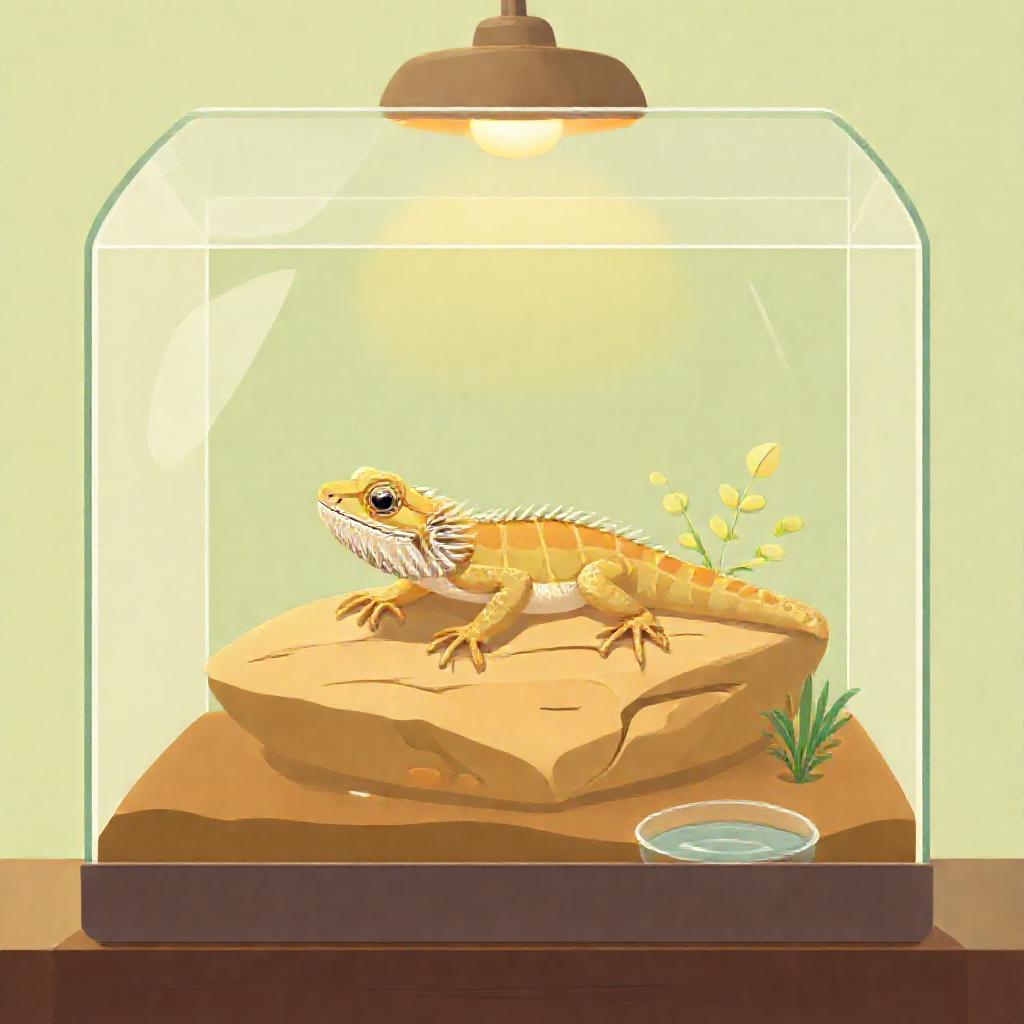
Choose the right enclosure before you buy
Bearded dragons grow a lot bigger than the small juveniles offered in pet shops. The RSPCA notes that this “robust-looking” lizard can reach around 45cm including its long tail, so it needs plenty of space. For a single adult dragon, the RSPCA recommends a vivarium of at least 120cm long × 60cm high × 60cm wide - and that’s a minimum, not a target.
The enclosure should be made of a solid material that’s easy to clean and holds heat well, with good ventilation to lower the risk of respiratory infection. Verify before you bring the animal home: get the vivarium set up and running so you can check the heating and lighting work properly.
Create a temperature gradient - not just “warm”
Bearded dragons are ectothermic and can’t warm themselves up, so you provide their heat. Rather than a single temperature, the RSPCA advises creating a thermogradient: a hotter, brighter end and a cooler, shaded end so the dragon can move between them to regulate its own temperature.
The RSPCA’s figures for keeping these temperatures right are:
- 38-42°C at the hot/basking end, heated with a 60-100 watt bulb.
- 22-26°C at the cooler, shaded end.
- Place a natural stone in the hot end as the “basking zone”, but keep the dragon’s back at least 25-30cm from the lamp, and fit the bulb with a wire mesh guard so it can’t burn.
- Use a thermostat to regulate the temperature and an infrared thermometer to record temperatures at both ends daily.
Keep the vivarium away from other heat sources such as a radiator or a bright, sunny window.
UVB lighting isn’t optional
UVB radiation doesn’t pass through glass, so a reptile UVB lamp must go inside the vivarium. The RSPCA explains that UVA helps with colour vision, while UVB lets the lizard make vitamin D3, which it needs to store and use calcium. Veterinary guidance from the MSD Veterinary Manual agrees: a lack of full-spectrum (UVB) lighting combined with dietary calcium deficiency can lead to a serious condition called secondary nutritional hyperparathyroidism - the metabolic bone disease seen in poorly kept reptiles.
The RSPCA’s recommendation is a high-output 10-12% UVB fluorescent tube, up to about half the vivarium length, mounted in the roof toward the hot end. Check the output with a UV Index meter so the gradient sits around 3.0-5.0 in the basking zone, dropping toward zero in the shade.
Arcadia is a leading specialist reptile-lighting brand, and its D3+ “Dragon” T5 UVB lamp is a high-output tube many bearded-dragon owners use. It’s designed for desert-living species like bearded dragons, and it pairs with the 2023+ Arcadia Pro T5 and LumenIZE kits (it’s a replacement bulb).

Note that this is the bulb only - you’ll need a compatible T5 fixture and, as always, check the UV Index in your own setup rather than assuming.
Substrate and digging opportunities
“Substrate” is simply the floor covering. For healthy adult dragons the RSPCA allows sand or a sand/soil mix (always reptile-safe) - and it suggests a digging box, such as a plastic tub with an entrance cut in the top and filled with a sand/soil mix, so the dragon can express natural digging behaviour.
Feed both insects and greens
Bearded dragons are omnivorous - they eat live invertebrates and plant material. The RSPCA recommends:
- Live invertebrates such as crickets, locusts and “calciworms”, never larger than the dragon’s mouth. Feeder insects should be gut-loaded with a formulated diet 24-48 hours before feeding.
- Safe greens and vegetables: watercress, rocket, chicory, cress and grated butternut squash, plus wild plants such as dandelion, clover and plantain leaves.
- Avoid spinach (it blocks calcium absorption) and be sparing with cabbage and kale (too much can affect hormone production).
Remove uneaten food daily and replace with fresh.
Water and hydration
Bearded dragons often get most of their moisture from their food and may not drink from a bowl much. Still, the RSPCA advises keeping a large, shallow dish of clean, fresh water at the cool end at all times, replaced daily and whenever it becomes soiled. For trouble with shedding (which young dragons do more often), adjusting hydration and humidity usually helps.
Handling, health signs and the vet
Reptiles can carry salmonella, so wash your hands before and after cleaning or handling. Don’t handle a new dragon unnecessarily for the first week while it settles in.
As signs of a healthy dragon, the RSPCA lists clear, bright eyes, a thick base to the tail with hips that don’t protrude, and a brighter colour after basking. Slowing down and eating less during cool seasons is normal (brumation), but a dragon shouldn’t lose weight or stop eating entirely.
If you notice anything concerning, seek advice from a specialist reptile vet - ideally registered before you bring the dragon home. The MSD Vet Manual notes that hospitalized reptiles should be kept within their “preferred optimal temperature zone”, a reminder of how much these animals depend on careful heating.
Sources
- RSPCA - “How to care for your bearded dragon”: https://www.rspca.org.uk/adviceandwelfare/pets/other/beardeddragon
- RSPCA - “Caring for Reptiles and other Exotic Pets”: https://www.rspca.org.uk/adviceandwelfare/pets/other
- MSD Veterinary Manual - “Clinical Procedures for Reptiles” (veterinary reference): https://www.msdvetmanual.com/exotic-and-laboratory-animals/reptiles/clinical-procedures-for-reptiles
This article is for general information and is not a substitute for professional veterinary advice. If your pet is unwell, contact your vet.