Rabbits
Rabbit Diet: What to Feed & How Much
Heads up: some links below are affiliate links. If you buy through them it costs you nothing extra and helps keep these guides free. We only link to things we would suggest to a friend. Read ourfull disclosure.
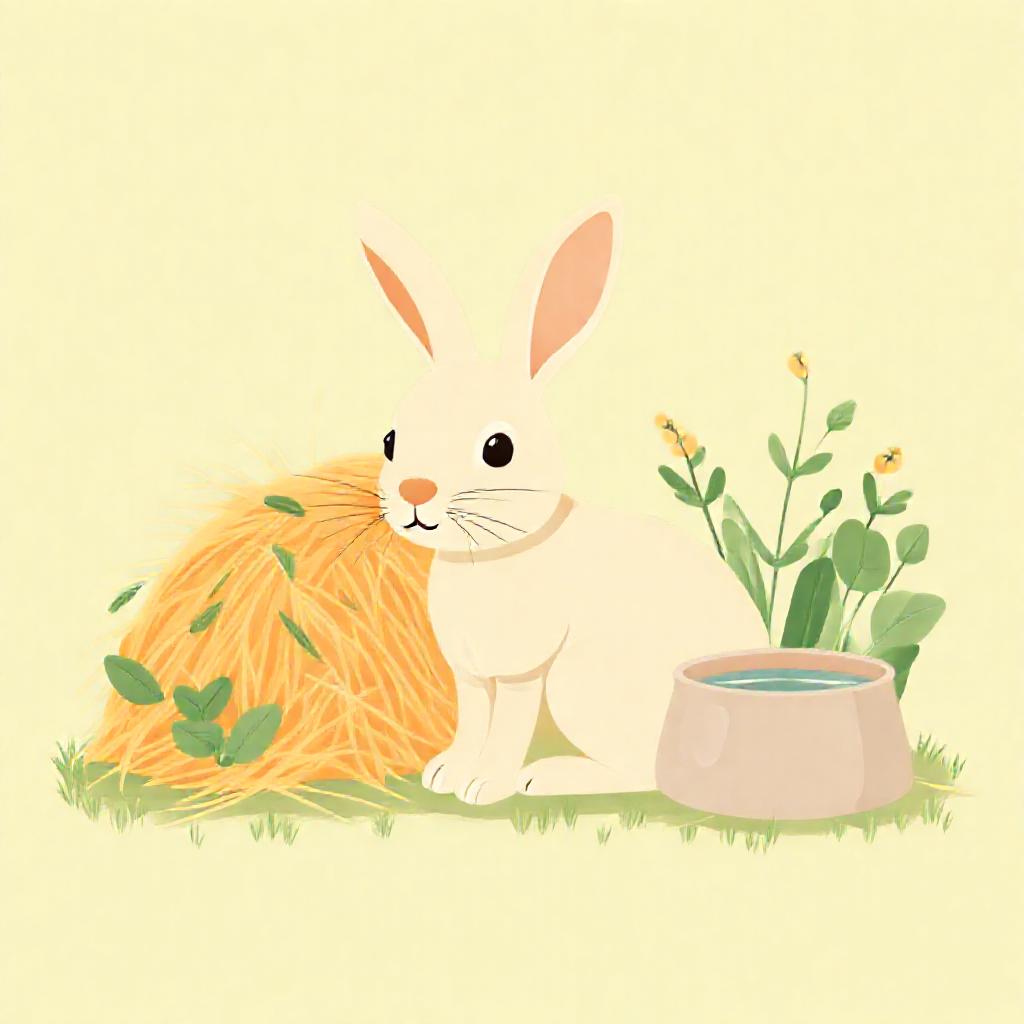
A rabbit’s diet is the single biggest factor in their long-term health. The charities that care for rabbits - PDSA, the RSPCA and Blue Cross - all agree the best diet is the one closest to what a wild rabbit eats: mostly hay and grass, some fresh leafy greens, a small amount of high-fibre nuggets, and clean water at all times. Get the balance right and you help protect your rabbit from two of the most common health problems: overgrown teeth and the serious gut condition called gut stasis.
Hay and grass: the mainstay
Around 85% of a rabbit’s diet should be hay and/or fresh grass. PDSA puts it at roughly 85%, and both the RSPCA and Blue Cross echo that figure, with Blue Cross describing 85 to 90% of the daily diet as hay or grass. It should be available constantly - rabbit teeth grow continuously, and chewing fibrous hay wears them down, while keeping the digestive system moving.
At a minimum, all three charities recommend giving at least one bundle of hay about the size of the rabbit itself every day. PDSA says unlimited hay is ideal, while the RSPCA and Blue Cross advise a constant supply of hay or grass available throughout the day. If your rabbit is new to fresh grass, PDSA advises introducing it slowly. Never feed mown grass or lawnmower clippings - as well as PDSA, both the RSPCA and Blue Cross warn these can make a rabbit ill.
Fresh vegetables and leafy greens
Fresh, washed greens make up roughly 10% of the diet. PDSA and the RSPCA both suggest giving around five to six different types of leafy greens, vegetables and herbs each day. Safe examples include spinach, kale, watercress, broccoli, celery, cabbage and dandelion leaves, plus fresh herbs such as mint, parsley, dill and thyme.
On amounts, guidance varies slightly by charity: PDSA recommends an adult-sized handful twice daily, the RSPCA recommends a large handful daily, and Blue Cross suggests an amount about the size of your rabbit’s head per day. Always wash fresh food before feeding. Introduce new greens gradually and in small amounts to avoid an upset stomach.
Rabbit nuggets (pellets)
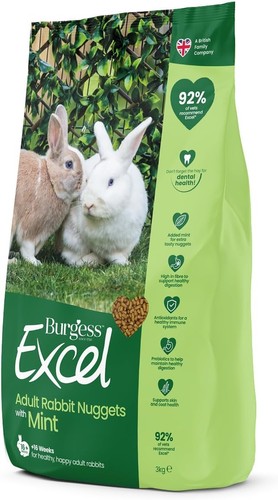
Only a small amount of nuggets is needed - they are concentrated. Blue Cross suggests an egg-cup full twice a day; PDSA recommends about one tablespoon once daily, or twice daily for rabbits over a certain size (over 3.5kg); and the RSPCA advises a small, measured amount following the manufacturer’s instructions. If a rabbit is given too many nuggets it will eat less hay, which PDSA warns can lead to overgrown teeth and gut stasis (the RSPCA notes that overfeeding nuggets means rabbits eat less hay). Scatter pellets around the home rather than using a bowl, so your rabbit can forage.
Water
Rabbits need a constant supply of fresh, clean water. PDSA says it should be changed daily, while the RSPCA recommends changing it twice a day. All note that many rabbits prefer a heavy ceramic bowl to a bottle, and any container should be cleaned regularly - and checked for the water freezing in winter.
Foods to avoid
Avoid muesli-style mixes entirely. Blue Cross and PDSA describe “selective feeding” - rabbits picking out the sugary bits - which all three charities say can cause dental disease, obesity and digestive problems. Fruit and root vegetables like carrot and apple are high in sugar, so give only as an occasional treat. The RSPCA also flags that some plants are poisonous to rabbits, including bluebells, foxgloves, holly and tulips - when in doubt, leave it out.
How much and how to switch slowly
Food quantities depend on your rabbit’s age, size and health. If you change anything, do it gradually - a sudden change can seriously upset the gut. PDSA recommends mixing new food with the old and transitioning over two to four weeks; the RSPCA suggests making the move from muesli to pellets gradually over several weeks. If your rabbit ever stops eating, contact your vet immediately, as this can be a sign of gut stasis.
Sources
- PDSA - “Feeding your rabbits”: https://www.pdsa.org.uk/pet-help-and-advice/looking-after-your-pet/rabbits/feeding-your-rabbits
- RSPCA - “Feeding Your Pet Rabbit a Healthy Diet”: https://www.rspca.org.uk/adviceandwelfare/pets/rabbits/diet
- Blue Cross - “What food is best for rabbits?”: https://www.bluecross.org.uk/advice/rabbit/food-and-weight/what-food-is-best-for-rabbits
This article is for general information and is not a substitute for professional veterinary advice. If your pet is unwell, contact your vet.